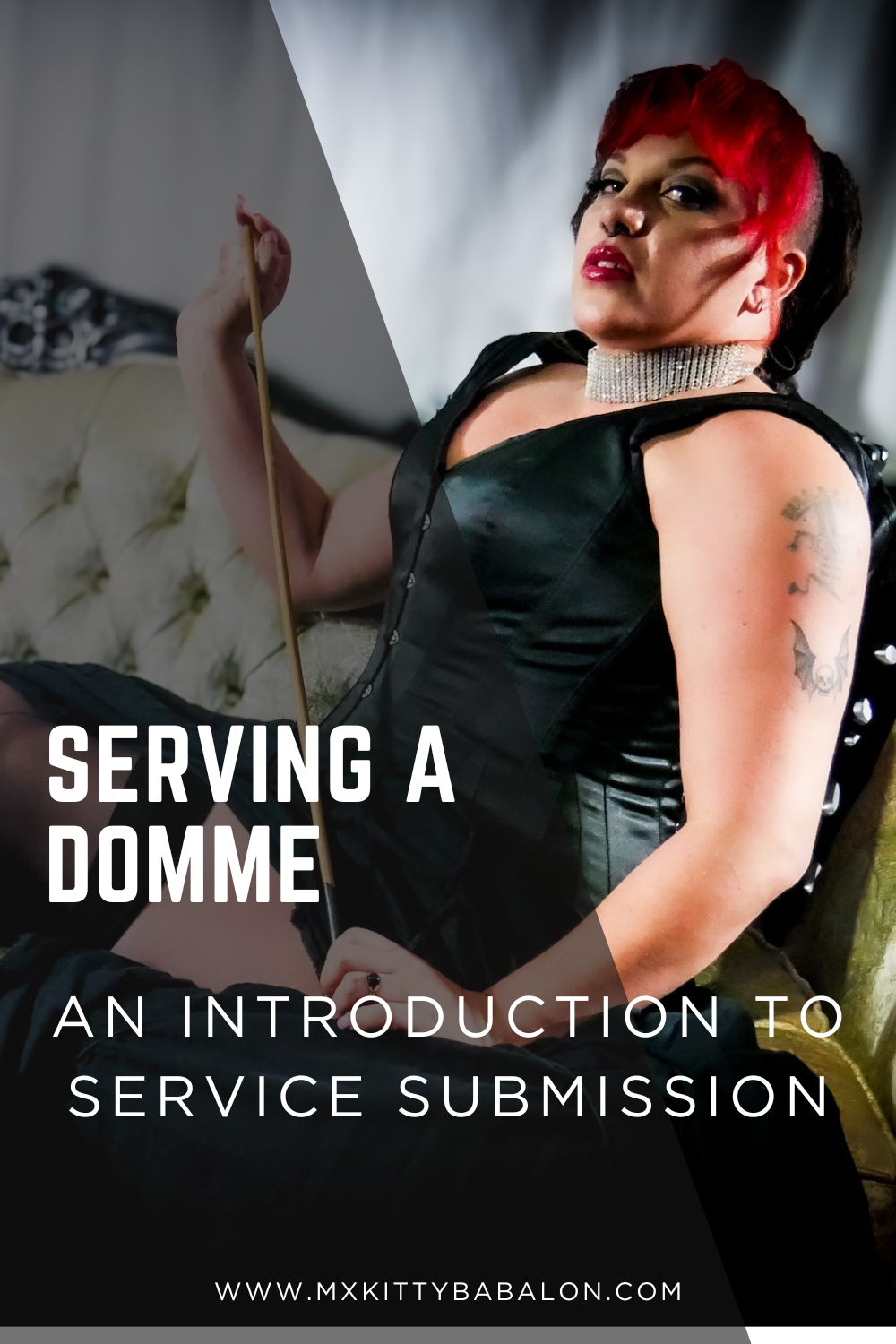
I receive a lot of messages that begin with some version of the same sentiment:
“I want to serve you.”
Sometimes that desire is paired with frustration about distance — “I wish I lived closer.” Other times the person is local, but unclear on what service would actually look like, especially in the early stages when I am not inviting someone into my personal or private space.
And very often, when I ask the simple follow‑up question — “What service can you offer?” — the answer is silence.
If you’ve found yourself sending similar messages and freezing when you get a responest his post is for you.
Consider this Part One of an ongoing series about service‑oriented submission. My intention here is to introduce the concept of service, clarify common misconceptions, and help you think more concretely about what you can actually offer — with or without proximity, and with or without money.
What Service Submission Actually Means
At its core, service submission is not about proximity, access, or grand gestures. It is about attunement, usefulness, and follow‑through.
A service‑oriented submissive derives meaning and satisfaction from:
- Making a Dominant’s life easier or more pleasant
- Anticipating needs rather than waiting to be told
- Offering skills, labor, care, or support in aligned ways
- Demonstrating devotion through consistency and reliability
Service is not performative desperation. It is not self‑abandonment. And it is certainly not saying “I’ll do anything” without having reflected on what that actually entails.
Common Misconceptions About Serving a Dominant
Let’s clear a few things up.
❌ “Service means physical access”
Service does not automatically mean being in my home, running errands, or doing domestic labor for me in person. Access is earned slowly, selectively, and intentionally.
❌ “Service means money”
Financial support can be a form of service, but it is not the only one — nor is it always the most meaningful.
❌ “I’ll do anything” is an offer
It isn’t. It’s a lack of self‑knowledge. An actual offer of service is specific, realistic, and grounded in your real capacities.
❌Service is about what you want to give
True service begins with curiosity about what is wanted, useful, or appropriate — not just what you feel inspired to offer.
Service Can Be Long‑Distance
You do not need to live in the same city — or even the same country — to serve.
Some forms of service are especially well‑suited to long‑distance dynamics:
- Administrative or organizational support
- Research and information gathering
- Digital tasks or creative labor
- Consistent engagement and amplification of my work
- Personal discipline, rituals, or accountability practices done in my name
Distance is not the barrier many people assume it is. Vagueness is.
Ways to Serve That Do Involve Money
I’m transparent about this on my website and profiles because clarity benefits everyone.
If you wish to serve in ways that involve financial exchange, appropriate options include:
- Subscribing to my fan platforms
- Purchasing premade video or audio content
- Ordering custom content
- Tipping for my time, labor, and creative output
This is not “buying access.” It is supporting the work of a professional Dominant and content creator. For some submissives, this form of service is deeply aligned and meaningful.
Ways to Serve That Do Not Require Money
Service submission is not limited to your wallet.
Non‑monetary service may include:
- Following my social media accounts and engaging thoughtfully with my posts
- Amplifying my work through shares, comments, and word‑of‑mouth (when appropriate)
- Offering skills you already possess (writing, editing, research, tech help, moderation, etc.)
- Practicing self‑discipline, personal growth, or habits I value
- Demonstrating reliability through consistent communication and respect for boundaries
What matters here is usefulness and follow‑through, not martyrdom.
Before You Offer Service, Ask Yourself These Questions
If you find yourself drawing a blank when asked what you can offer, start here.
Take time with these. Write your answers down.
Skills & Capacity
- What am I genuinely good at?
- What do people often ask me for help with?
- What skills do I use at work or in my daily life?
Resources
- How much time can I realistically offer each week?
- What energy do I have available — not just on my best days?
- What tools, platforms, or access do I already have?
Motivation & Values
- What draws me to service submission specifically?
- Do I value structure, caretaking, problem‑solving, creativity, devotion, or discipline?
- How do I handle being told “not yet” or “no”?
Boundaries & Growth
- What am I not willing or able to offer?
- What would I like to learn or develop as part of service?
- How do I demonstrate consistency over time?
Self‑knowledge is attractive. Ambiguous promises are frustrating.
A Note on Attention and Entitlement
Service does not guarantee attention, approval, or a dynamic.
Offering service is an invitation, not a transaction. It demonstrates interest and alignment — nothing more, nothing less.
A Domme noticing you is not the same as a Domme owing you.
In Closing
If you want to serve a Domme, begin by becoming someone who understands their own capacities and motivations.
Service submission is not about proximity or instant access.
It is not about fantasy alone.
It is about thoughtfulness, self‑awareness, and follow‑through.
In future posts in this series, I’ll be exploring specific forms of service in more depth — including domestic service, administrative service, devotional practices, and skill‑based offerings.
For now, let this be your starting point.
If you say you wish to serve, make sure you’ve taken the time to understand how.

Leave a Reply