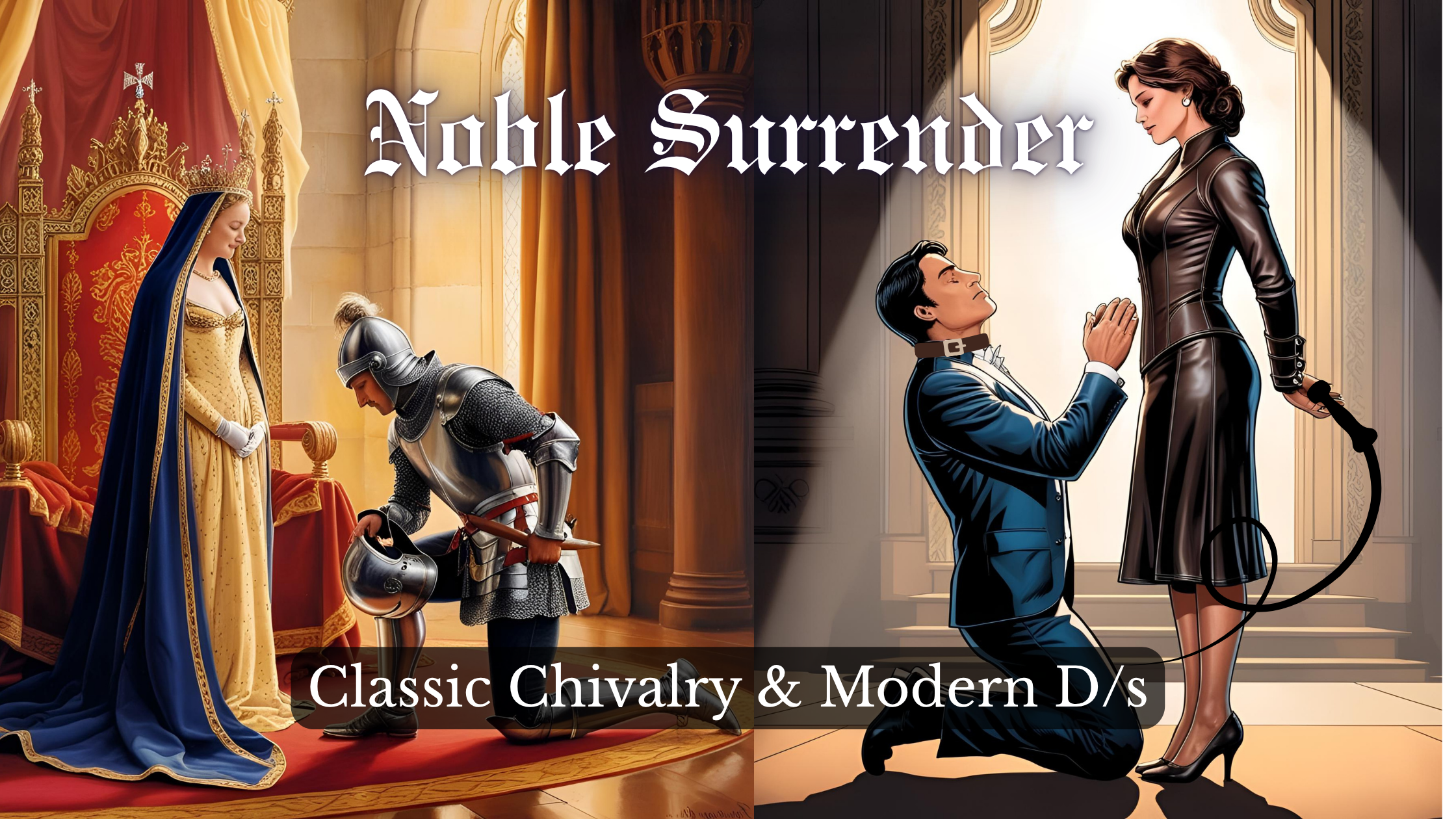
The Sacred Surrender to Your Queen
The medieval tradition of courtly love wasn’t just about poetry and chivalry; it was a structured form of devotion, service, and surrender. Knights pledged themselves to noblewomen, offering acts of valor, loyalty, and sacrifice in exchange for the privilege of their favor. Today, in Femdom and power exchange relationships, we see a strikingly similar dynamic: the submissive serves, the Dominant bestows grace, and both parties are elevated in the process.
noble surrender
But how does this historical framework apply to modern D/s? Let’s explore how the poetry of servitude can deepen your connection, turning groveling into art, and suffering into transcendence.
Courtly LoveThe modern use of the term “courtly love” comes from Gaston Paris. He used the term amour courtois (“courtly love”) in a 1883 article discussing the relationship between Lancelot and Guinevere in Chrétien de Troyes’s Lancelot, the Knight of the Cart (c. 1181). In his article, Paris outlined four principal characteristics of amour courtois:
- The love is illegitimate, secretive.
- The male lover is in an inferior position and the woman in an elevated one.
- The man does quests, tests, or trials in the woman’s name.
- There is an art to it, it has rules, in the same vein as chivalry or courtesy.
The Stages of Courtly Love
The signs of infatuation, desire and devotion were often codified in a variety of texts and manuscripts.
- Attraction to the lady, usually via eyes/glance
- Worship of the lady from afar
- Declaration of passionate devotion
- Wooing with oaths of virtue and eternal fealty
- Moans of approaching death from unsatisfied desire (and other physical manifestations of lovesickness)
- Heroic deeds of valor which win the lady’s heart
- Consummation of the secret love
- Endless adventures and subterfuges avoiding detection
In Chivalry, a knight didn’t just serve—he worshipped. His lady was untouchable, divine, and his suffering for her favor was his highest honor. Some Knights would take vows of chastity in honor of their Lady Love, going years without sex, their desire curated and controlled. Pain, ordeals and suffering were as love letters—tournaments, battles, sleepless vigils.
Thought Experiment: If your Domme commanded you to prove your devotion without sex or touch—only through suffering—what would you offer?
The Queen’s Power: Grace & Cruelty as Divine Right

A noblewoman in medieval courts was no mere muse—she was a tyrant of temptation, withholding and bestowing favor as she pleased. If a Lady let her knight glimpse her ankle, her wrist— it was just enough to ruin him. While the modern Domme may be more explicit with her lingerie shots, voice notes, or the slow drag of her heel over your face serve the same purpose: you are never satisfied, only starving. A true Queen doesn’t just hurt you—she elevates you through the nobility of her cruelty. Humiliation goes beyond abasement and degradation; it becomes alchemy, turning your shame into gold at her feet.
Chivalry was also marked by swearing of oaths, tokens, trials. Your rituals—kneeling, collaring, orgasm denial—are just as sacred.
The Ideals of Courtly Love & Their D/s Parallels
Devotion as a Path to Enlightenment
In courtly love, the knight’s submission was seen as a spiritual pursuit. His service was not about groveling but about ennoblement — by surrendering to his lady, he became a better version of himself.
noble surrender
– Modern D/s Parallel: A submissive’s surrender isn’t about degradation (unless they desire it); it’s about transcendence. By submitting, they shed ego, embrace vulnerability, and grow under their Dominant’s guidance.
The Strength of Vulnerability
Courtly knights didn’t fear showing longing or despair — their emotional exposure was a sign of commitment, not weakness.
– Modern D/s Parallel: True submission requires radical vulnerability. A submissive who kneels, confesses desires, or endures teasing isn’t weak; they’re demonstrating trust and resilience.
Rituals of Service
Knights performed tasks (bringing gifts, composing poetry, competing in tournaments) to prove their dedication.
– Modern D/s Parallel: A submissive’s rituals (foot worship, chastity, orgasm control) aren’t just kinks — they’re acts of devotion reinforcing hierarchy.
Tithing: The Financial Oath of Fealty
In feudal systems, vassals paid tribute (money, crops, goods) to their lords in exchange for protection and favor. This wasn’t exploitation — it was a sacred exchange of energy.
– Modern D/s Application:
– Tributes as Energetic Exchange: Financial domination (findom) isn’t just about money; it’s about symbolic surrender. A sub’s tribute (whether a weekly allowance or spoiling their Domme) cements their devotion.
– A Two-Way Blessing: Just as lords cared for their vassals, a wise Domme honors a sub’s tribute with attention, structure, or rewards (like a good boy’s orgasm).
– Sacred Reciprocity: Tithing shouldn’t be exploitative — it’s a mutual pact. The Dominant provides guidance, the submissive fuels the dynamic with resources.
Conclusion: D/s is a Game of noble surrender
Courtly love was a dance of power, poetry, and mutual elevation. Today’s D/s relationships can mirror this — not as fantasy roleplay, but as a conscious dynamic where:
– Surrender is strength.
– Service is sacred.
– Tithing is an act of devotion.
And above all, both Dominant and submissive are ennobled by the exchange.
Food for Thought:
Could modern D/s learn from the structure of courtly love? Should financial tributes be framed as feudal oaths rather than transactions? How might you weave these ideas into your own power exchange?
Leave a Reply